Over the past two years, there has been a very popular formula for AI startups:
one vertical scenario + one model API + one set of Prompts + one layer of UI = a new AI product.
As a result, we have AI search, AI research, AI PPT, AI design, AI video, AI writing, AI website building, AI knowledge management, and various Copilots for lawyers, salespeople, teachers, consultants, product managers, and designers. Every need seems to deserve its own standalone AI App. Especially after agents emerged in 2025, a large number of agent + vertical track applications built with the mastra, langchain, and langgraph frameworks sprang up like bamboo shoots after rain, and AI also greatly reduced development costs, which further accelerated this trend.
However, since entering the Harness era at the beginning of this year, we may not need so many isolated vertical AI applications at all. What users really need is a general-purpose Harness Agent like Codex or Claude Code, then install different Skills for it, connect different MCPs, and integrate a whole set of professional capabilities through Plugins.
Needs will certainly not disappear. What disappears is the product assumption that “every need must grow into a standalone App.”
Traffic has already started voting
First, look at a set of changes in website traffic in June 2026:
Product | Initial monthly visits | Current monthly visits | Change |
|---|---|---|---|
Manus | about 28 million | about 23 million | -17.9% |
Genspark | about 15 million | about 11 million | -26.7% |
Lovart | about 3.8 million | about 3 million | -21.1% |
LibTV | about 2 million | about 2.2 million | +10.0% |
YouMind | about 1 million | about 1.1 million | +10.0% |
MuleRun | about 900 thousand | About 670 thousand | -25.6% |
Dokie | About 740 thousand | About 540 thousand | -27.0% |
Flowith | About 670 thousand | About 490 thousand | -26.9% |
YouWare | About 270 thousand | About 270 thousand | 0% |
Among these 9 products,6 declined, 2 grew, and 1 stayed flat. Total monthly visits fell from about 52.38 million to 42.27 million, a decrease of about 10.11 million visits in one month, for an overall decline of 19.3%.
Similarweb's public page shows that in June 2026, Manus had about 23.2 million visits, down 17.19% month over month; Genspark had about 11.5 million visits, down 25.07%; Lovart had about 3.1 million visits, down 19.79%; Flowith had about 499 thousand visits, down 26.31%. These precise values are basically consistent with the rounded values in the table.
Although traffic absolutely cannot represent a product's survival or death, the problem is that the declines of many of the above AI products are not 3%, but are concentrated between 18% and 27%. This means their declines cannot be fully explained by overall market fluctuations. Even if we cannot directly say these products "lost how many users," at least we can be certain—A large number of standalone AI products are losing users' attention, open frequency, and usage entry points。
More notably, Manus and Genspark themselves are not even strictly vertical applications. They are already fairly general-purpose Agent products. So the real change may not just be that "vertical AI Apps will decrease"—the market may likewise not have room for so many mutually independent general-purpose Agents.
Users have not left the demand; they are just reducing entry points
Of course users still need to do research, write documents, generate videos, design pages, make PPTs, and analyze data. The question is: to complete these tasks, are users really willing to open a dozen separate websites?
Every time users enter a new product, they have to repeat a set of costly actions: re-register and pay, re-upload files, re-explain their background, re-describe project goals, reconnect data sources, re-authorize accounts, and then re-teach the AI their preferred way of working. That is why in our product design we always emphasize: one extra step is 50%.
Vertical applications appear to lower the barrier for a single task, but they scatter the user's context across countless products. And the most important asset of an AI Agent is precisely not some feature button, but context.
A truly useful Agent should already know: what project you are working on, where your files are, what tools the team uses, what decisions you have made in the past, what your brand guidelines are, how you habitually organize information, and what kind of result counts as complete.
When this information already exists in a long-term Harness, users naturally do not want to start from scratch on a new AI website just for a niche task. Therefore, users have not left AI. They are leaving isolated AI entry points.
Harness is not another chatbot
The Harness discussed here is not the model itself, nor is it just a bigger chat box. It is the runtime environment wrapped around the model that enables the model to continuously complete real work.
A complete Harness is usually responsible for:
managing long-term context and project files;
Understand the task and break down the execution plan;
select models, tools and sub-agents;
call the local environment, browser and external systems;
handle permissions, confirmations, failure retries and state recovery;
check whether the results meet the requirements;
finally generate code, documents, pages, spreadsheets or other deliverable outputs.
The model handles reasoning, and the Harness is responsible for making that reasoning land. An Agent is the actor, while the Harness is the work system in which action takes place.
For example, Claude Code no longer just answers code questions; it can read codebases, modify files, run commands, and connect to development tools, while existing across different environments such as the terminal, IDE, desktop and browser. Codex likewise places the Agent in a complete environment that can access projects, execute tasks, work in parallel and manage Skills.
They first succeeded in the programming field not because this form only applies to programmers, but because code naturally has several advantages: clear file structure, a mature toolchain, runnable results, and verifiable tasks.
Once the Agent's file processing, browser operation, data analysis and software connection capabilities mature, the same product form will expand from programming to broader knowledge work.
In June 2026, OpenAI said that Codex's weekly active users had exceeded 5 million, of which non-developers such as analysts, marketers, designers and researchers accounted for about 20%, and the growth rate of non-developer users exceeded that of developers by 3 times. Traffic and active user metrics across different products cannot be directly compared, but this change at least shows that Harness-style work environments are breaking through the boundaries of programming tools.
Skill, MCP and Plugin are replacing a large number of standalone Apps
In the Harness era, capabilities that previously had to be packaged as complete products can be broken down into several lighter, more easily composable parts.
Layer | Problem to solve | Typical content |
|---|---|---|
Harness | Who will continuously complete the tasks | Context, Agent Loop, permissions, execution, verification, delivery |
Skill | How should the task be completed | SOPs, methodologies, templates, scripts, checklists |
MCP | What the Agent can access | Files, databases, Figma, Slack, Jira, GitHub, internal systems |
Plugin | How capabilities are installed and distributed | Bundles combining Skills, MCP configurations, integrations, Hooks, and default workflows |
The reason is simple: why should I pay extra for your model when it may not be stronger than my Codex or Claude (the same applies to domestic models; in China, I can still use the currently strongest domestic models such as GLM).
Skill: Turn professional experience into reusable workflows
A Skill is not a simple Prompt.
If you are not very familiar with skills, you can read the document introduction I wrote earlier: Skill skills
It can include task descriptions, reference materials, templates, scripts, check rules, and specific execution steps. OpenAI defines Codex Skill as a task capability package composed of instructions, resources, and optional scripts; Claude Code also allows creating professional workflows that can be automatically triggered or actively invoked throughSKILL.md.
For example, "conducting a design review" does not need to be made into a separate AI design review website. It can become a Skill that specifies: which pages should be checked, how to find consistency issues, how to judge accessibility risks, how to classify by severity, how to cite design specifications, and what structure to use for the final report output.
What is truly valuable is this methodology, not the chat box outside.
MCP: Let Agents enter business systems directly
If you have already started using Harness agent tools like Codex or Claude code, you have most likely already started using MCP to connect many of your everyday work tools, such as Chrome, Jira, etc.
What MCP solves is not "whether AI can think," but "whether AI can access the real world."
If you still do not fully understand MCP, you can also read the document introducing MCP in my knowledge base: MCP
MCP is an open standard for connecting AI applications with external data, tools, and workflows. Through MCP, Agents can access file systems, databases, search tools, project management platforms, and team collaboration software, instead of relying on users to manually copy and paste.
In the past, an important selling point of a vertical AI product might have been "we integrate with Jira, Figma, and Slack." But as these connections gradually become standardized, integration itself is no longer enough to support an independent product entry point. Users can directly connect the same systems to the Harness they use long-term.
Plugin: package and install a set of capabilities
Plugin, by contrast, is the distribution unit. A single Plugin can simultaneously contain multiple Skills, application integrations, MCP configurations, Hooks, permission descriptions, and default workflows. OpenAI's Codex documentation also describes Plugin as a form suitable for cross-team sharing, packaging connectors or MCP configurations, and publishing stable capability packages.
For example, a "product design Plugin" can simultaneously contain: a competitive research Skill, a user interview analysis Skill, a design review Skill, Figma MCP, Notion MCP, design system documentation, and a quality check Hook that runs automatically before submitting a design.
Users do not need to buy six independent AI products. They only need to install this set of capabilities into their own Harness.
A task no longer requires a corresponding product
Suppose I want to do a competitive analysis. In the traditional AI App model, I might need to:
First open a search product to collect materials;
Then open a knowledge management product to organize the content;
Then enter a data analysis product to process the spreadsheet;
Next, use a PPT product to generate the report;
Finally, adjust the visuals in a design tool.
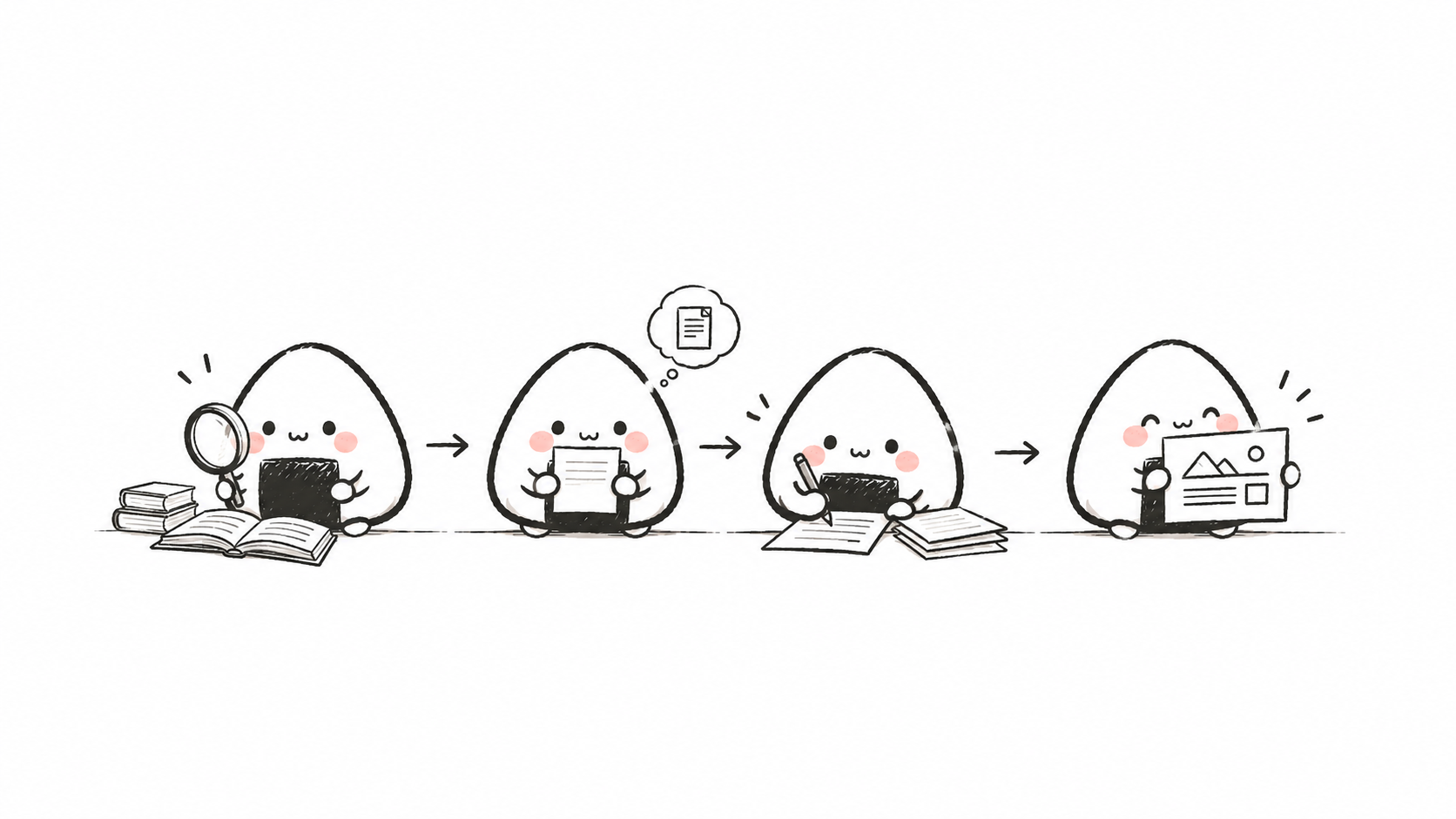
The person truly responsible for connecting these tools is still me. However, in Harness mode, I only need to state the goal:
分析这五个竞争对手过去半年的产品变化、用户反馈和流量趋势,找出三项机会,并生成一份适合内部评审的报告和演示文稿。After that, I can leave everything entirely to AI: the competitor research Skill defines the analysis methods and output standards; MCP reads materials from Similarweb, Notion, Slack, databases, and other systems; Plugin provides the company's internal templates, brand guidelines, and approval workflows; Harness is responsible for breaking down tasks, running parallel searches, checking sources, generating charts, writing conclusions, and delivering the final files.
Users always stay within a single work environment. This is the most critical point! The value offered by a "competitor analysis AI App" has not disappeared. It has simply gone from being a standalone entry point to becoming one capability within Harness.
This is the core of the change: vertical needs still exist, but the one-to-one correspondence between vertical needs and standalone Apps is disappearing.
The real dividing line is not vertical versus general, but entry point versus capability
In the past, we often discussed: will general Agents replace vertical Agents? But a more accurate way to divide them may be:
which products can become users' primary work entry point;
which products are better suited to being a capability inside an entry point.

Primary entry points naturally have strong scale effects. The longer users use them, the more Harness understands the user's projects, preferences, files, team, and historical decisions. The more Skills and Plugins users install, the higher the cost of migrating to another Harness.
A user can accept dozens of Skills, but it is hard to maintain dozens of general Agents at the same time. Because every general Agent wants to regain access to your context, files, permissions, and usage habits.
Therefore, there may be a large number of capability providers in the future, but only a few true Harnesses. This also means that for the vast majority of startup teams, the most realistic choice is not to build another Codex or Claude Code, but to become an irreplaceable capability within Codex, Claude Code, or other Harnesses.
Vertical applications will not disappear, but vertical AI shells will disappear first
However, don't be too extreme—vertical applications will not completely disappear!
In this set of traffic data, LibTV and YouMind are still growing, and YouWare also remains stable. So the conclusion is definitely not that "all vertical AI products will fail."
What will truly be squeezed are products with only the following structure: a general model + a set of Prompts + a chat box + a few basic tools. We generally call this an Agent shell. As long as the underlying Harness can obtain the same models, tools, and prompts, this type of product is easily absorbed. Vertical applications that still have a chance to exist as independent products usually possess other value that is difficult for a Harness to replace.
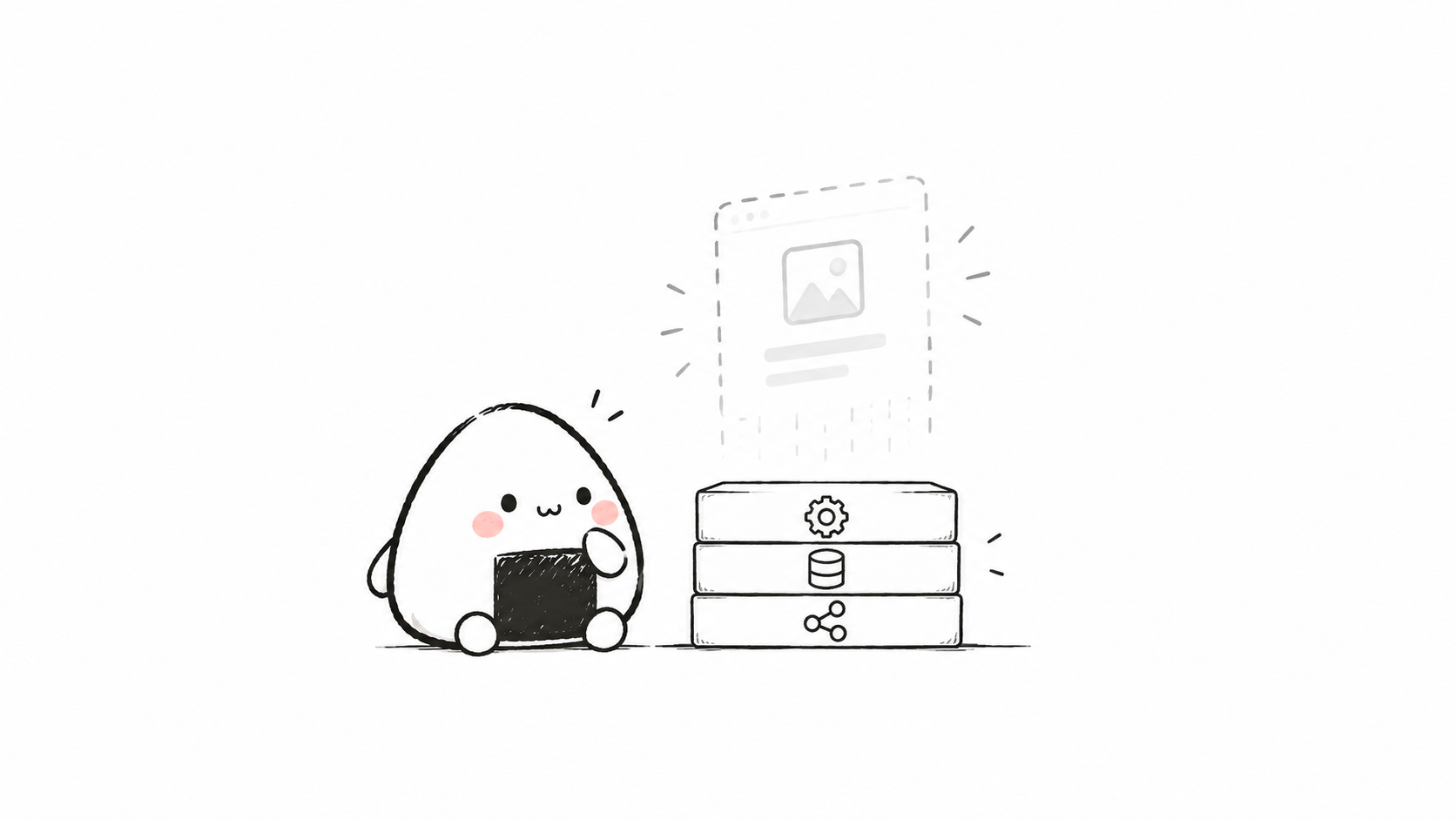
It is the business's System of Record
When a product stores core business state over the long term—such as customer relationships, contracts, financial records, project history, or team collaboration relationships—it is no longer just an AI tool. Agents can enter this system to work, but it is difficult to easily replace the system itself.
It requires high-density professional interaction
Products such as Figma, CAD, video editing, music production, and data visualization require a large amount of spatial operation, direct manipulation, real-time feedback, and precise control. Natural language can help users complete part of the work, but it is not necessarily suitable as the only interface for all operations.
AI will enter these products, but that does not mean these products will degenerate into chat boxes.
It possesses unique data, network effects, or liability boundaries
In healthcare, legal, financial, and enterprise compliance scenarios, what is required is not only generated results but also permission management, audit records, attribution of responsibility, and professional verification.
In these scenarios, the value of a product is not just "being able to do tasks," but also "being able to take responsibility for tasks." Therefore, when judging whether a vertical product can continue to exist independently, one should not only ask: "Is its AI capability strong enough?" Instead, one should ask: "Besides AI capability, what irreplaceable state, interaction, data, relationships, or responsibility does it also possess?"
The most dangerous thing is the intermediate state
Product strategy in the Harness era will become increasingly polarized. Either you become the user's primary Agent entry point, with long-term context, an execution environment, a permission system, and a capability ecosystem. Or you become the most usable professional capability within that entry point, providing excellent Skills, MCP, Plugins, data, and services. Either way, the most dangerous position is the intermediate state: neither capable of becoming the primary entry point, nor willing to give up packaging a modularizable capability as an independent App.
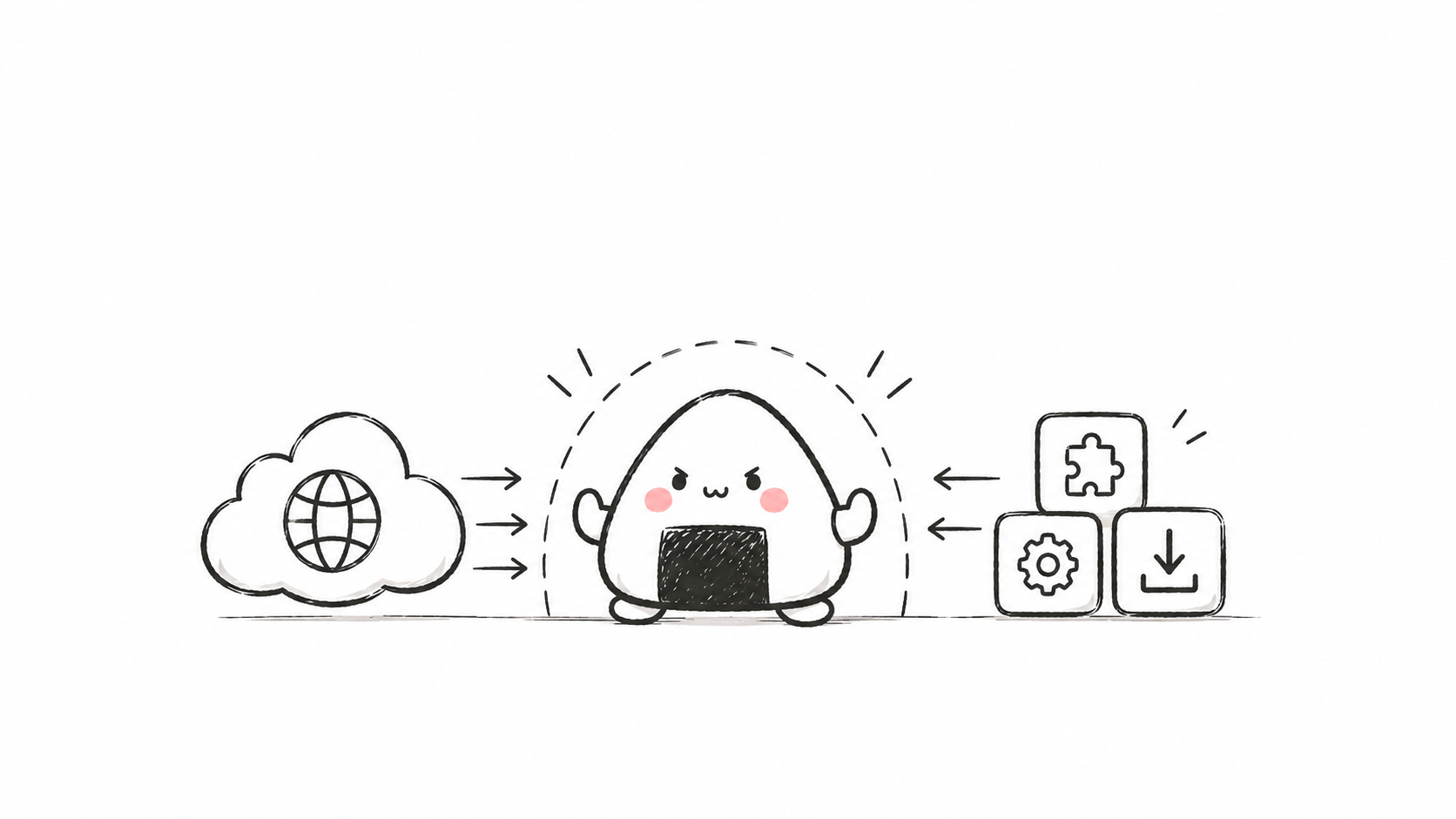
Such products need to acquire users, handle login, manage subscriptions, and build trust independently, yet they can only solve a brief segment of the user's workflow. Once a general-purpose Harness natively supports similar capabilities, or allows users to install a corresponding Plugin, standalone products will immediately face the problem of their entry-point value being hollowed out.
I feel the new product litmus test should be:
Can my product own the user's persistent core context?
Is my product the ultimate storage location for business state?
Is my specialized interface truly irreplaceable by general-purpose interaction?
If the answers are all no, then rather than continuing to build another new AI App, it would be better to distill the core value into a capability that an Agent can install, invoke, and reuse.
Product design will also shift from "designing pages" to "designing delegation"
This change not only affects the direction of startups, but also changes the object of product and UX design.
The core interaction of the App era is navigation. Designers care about how users enter a page, which button they click, what form they fill out, and through what path they complete a task. But as OpenAI's Altman said, the mobile and PC operating systems of the past were islands of individual apps, and that is not the solution for the AI era.
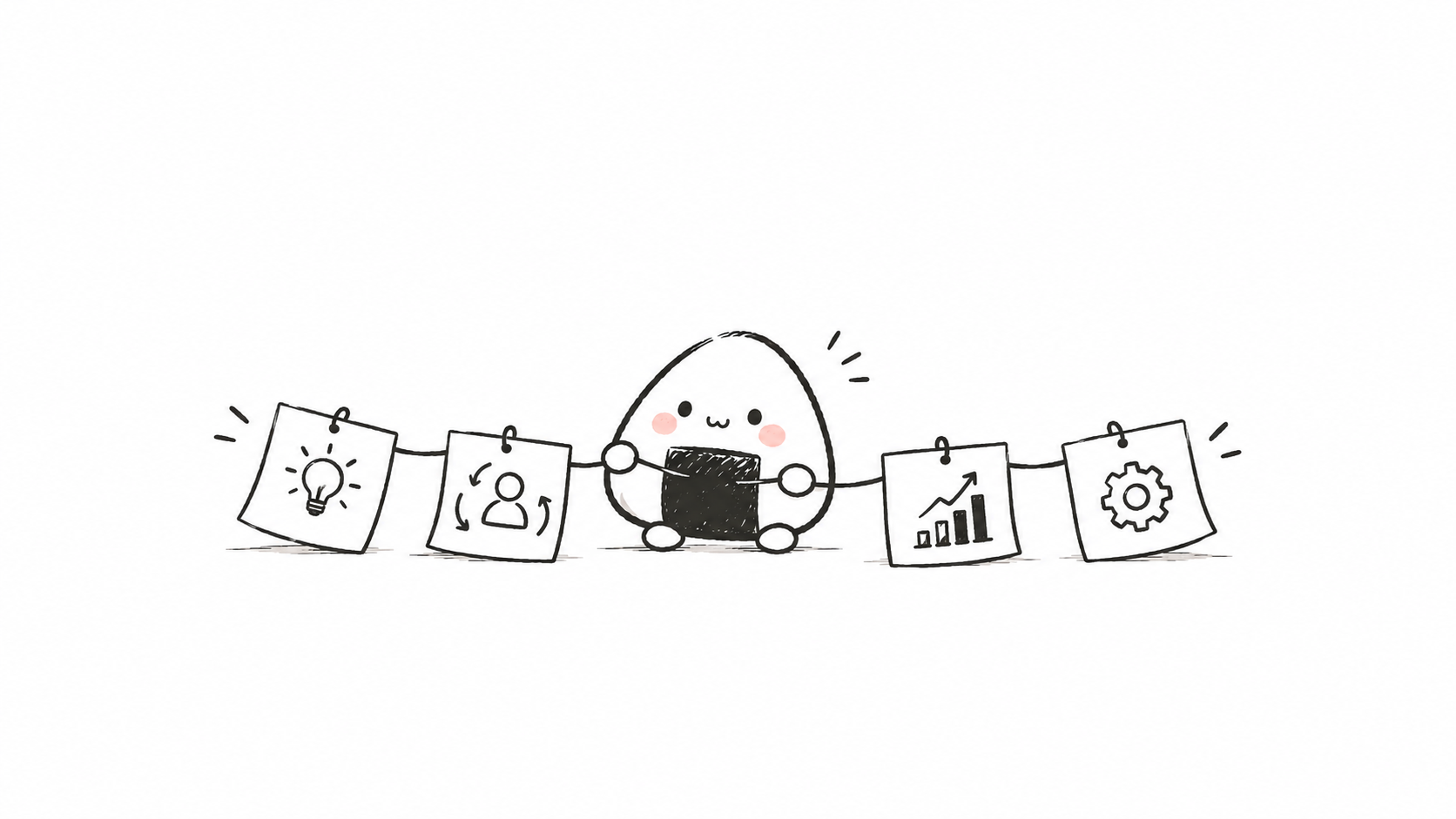
The core interaction of the Harness era is delegation. Designers need to care about:
How users express goals, how the system demonstrates its understanding of context, how the Agent proposes a plan, which operations require authorization, how task progress is perceived, at what points the user intervenes, how to recover after failure, where the basis for results comes from, and how the user inspects and modifies the final output.
In the past, we designed a fixed path. In the future, we design an execution process that users can observe, constrain, and correct. Therefore, the AI era does not mean UI is unnecessary. On the contrary, UI will transform from a container for fixed functions into a control panel that appears on demand during the task process. The truly important interface is one that can tell users: what the Agent is doing, why it is doing it, and when I should take over.
Entrances converge, capabilities explode
The SaaS era split workflows into countless standalone apps—research had research software, writing had writing software, design had design software, project management had project management software. Every piece of software had its own interface, account, data, and subscription.
The Harness era is undergoing a reverse reorganization—software is reaggregating at the entrance layer and re-splitting at the capability layer.

Entrances will converge into a small number of Harness Agents capable of understanding users over the long term, accessing work environments, and executing complex tasks. Meanwhile, the methods, tools, and professional capabilities originally encapsulated in standalone apps will be broken down into Skills, MCPs, Plugins, APIs, and on-demand generated professional interfaces.
So the software world of the future may not be ten thousand AI Apps. It is more likely to be a small number of Harnesses, plus a million kinds of capabilities that can be installed, combined, and invoked.
Vertical needs will not disappear, and professional software will not disappear either. But a large number of standalone AI products that merely wrap a shell around a general model will find it increasingly difficult to justify: why does the user still need to open a new entrance? Ultimately, the structure of the market will become very clear, namelyeither own a Harness, or become an irreplaceable capability within a Harness. And the AI Apps caught between the two may be exactly the layer that gets compressed first.
71 likes
You can like once today